 Weapon Types
The Tanto – a Short Blade With a Long History
The tanto is the shortest blade category in the nihonto classification — under 30 cm in length — yet the craft and artistry concentrated into these small blades
Continue ReadingMetallurgy · History · Craft · Martial Arts
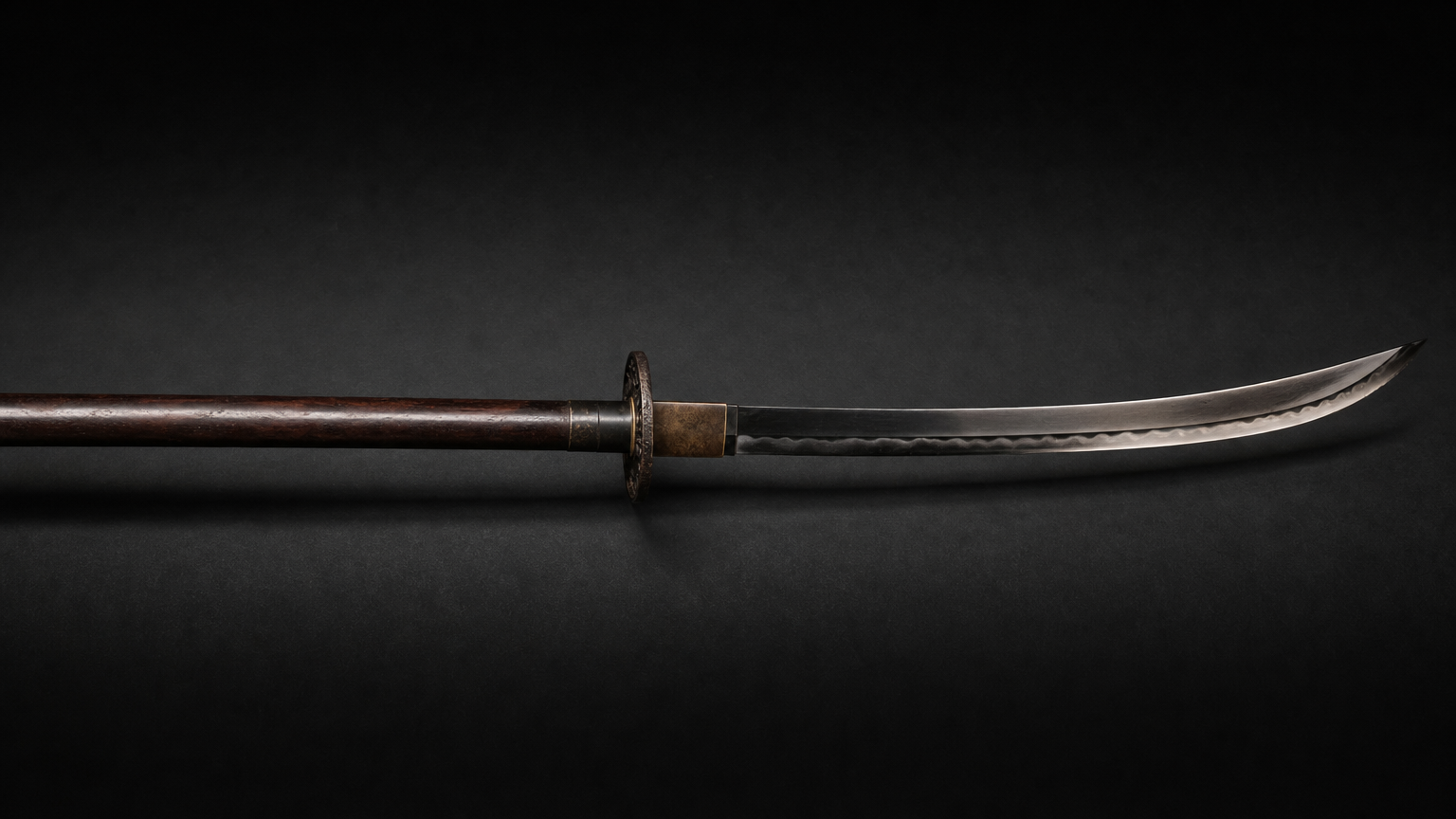
The Japanese naginata — a curved blade mounted on a long wooden pole — is one of the most frequently misunderstood weapons…
 Weapon Types
The tanto is the shortest blade category in the nihonto classification — under 30 cm in length — yet the craft and artistry concentrated into these small blades
Continue Reading Katana
Maintaining a Japanese blade correctly is not complicated, but it requires consistency. Carbon steel — the material in all traditional nihonto and most quality production katana — will
Continue Reading Damascus Steel
The word “Damascus” is used in the market to describe two fundamentally different materials. Understanding which is which — and why it matters — is the most practical
Continue ReadingSwords of the East is an independent journal about the Japanese sword: how it is forged, how it changed across a thousand years of history, and how it is still studied and practised today. Every guide is written for readers who want more than a list of facts: collectors trying to read a blade, martial artists who train with one, and anyone curious about why a curved piece of steel became one of the most admired objects in the world.
If you are new to the subject, start with the katana, which explains the blade's shape, its mountings and the ideas attached to it, and then follow the long arc of Japanese sword history from early straight blades to the living tradition of modern smiths. The sword vocabulary glossary collects the terms you will meet everywhere else, from kissaki to nakago.
The metallurgy section looks at what the steel actually is. Our guide to Damascus steel separates historical wootz from modern pattern welding, and the sword steel comparison sets tamahagane, high-carbon and stainless steels side by side. Closer to the blade itself, the article on hamon types explains the temper line, and the profile of Masamune shows what the greatest smiths achieved with it.
The sword is also a practice. Kendo, kenjutsu and the living sword arts covers the schools that keep blade technique alive, and the dojo finder helps you locate one near you. If you own a blade, the guide to Japanese sword care walks through oiling, cleaning and storage.
When you want to test what you have learned, the tools in the Practice Hall below let you work out a suitable blade length, name the parts in the sword anatomy quiz, or try to date a blade in the era identification challenge.
Test your knowledge. Measure your steel. Find your dojo.
Tamahagane vs. high-carbon steel vs. stainless - side by side.
Compare steels →Find the correct nagasa for your height and draw style.
Calculate →Name every part of the katana - from kissaki to kashira.
Take the quiz →Locate Kendo and Iaido schools near you across North America and worldwide.
Find a dojo →Can you date a blade by its hamon, shape, and signature?
Accept the challenge →
Understanding katana geometry — the precise vocabulary for describing a blade’s shape, curvature, cross-section, and proportions — is…
MakersGoro Nyudo Masamune worked in Kamakura around the late 13th and early 14th century. He is considered by…
Sword HistoryWhen Tokugawa Ieyasu consolidated power after the Battle of Sekigahara in 1600 and established the Edo shogunate in…
KatanaThe hamon — the temper line that marks the boundary between a Japanese blade’s hardened edge steel and…