The katana is the defining object of Japanese martial culture — a curved, single-edged longsword whose history spans more than a thousand years of metallurgical refinement, battlefield adaptation, and philosophical transformation. It is simultaneously a weapon of devastating precision and an object of profound aesthetic and spiritual significance, studied today by historians, martial artists, collectors, and smiths across the world.
Understanding the katana means understanding several disciplines at once: the chemistry of steel, the history of feudal Japan, the philosophy of Bushido, and the craft traditions of some of the world’s most technically exacting metalworkers. This guide covers all of it — from the physical structure of the blade to the living tradition of licensed smiths working today in Japan.
The Anatomy of a Katana
A katana is not simply a curved sword. Every element of its construction has a name, a function, and a history of design evolution driven by the changing demands of the battlefield and the aesthetic preferences of successive eras.
The nagasa is the blade’s cutting length, measured from the tip (kissaki) to the notch at the base of the blade (munemachi/hamachi). A standard katana nagasa falls between 60 and 73 centimetres, with the ideal historically considered to be around 70 cm. The sori — the blade’s characteristic curvature — is measured as the maximum perpendicular distance between the unsharpened spine (mune) and a straight line drawn from base to tip. The degree and placement of sori changed significantly across historical periods: early Koto-era blades had deep curvature concentrated near the tang, while later Shinto-era katanas moved the curve toward the centre.
The kissaki is the point section, bounded by a curved line called the yokote. It comes in three principal forms: the ko-kissaki (small point, associated with refined Heian-period work), the chu-kissaki (medium point, the classical standard), and the o-kissaki (large point, favoured in the armour-defeating blades of the late Sengoku period). The kissaki’s geometry determines both the penetrating capability of the thrust and the visual character of the blade.
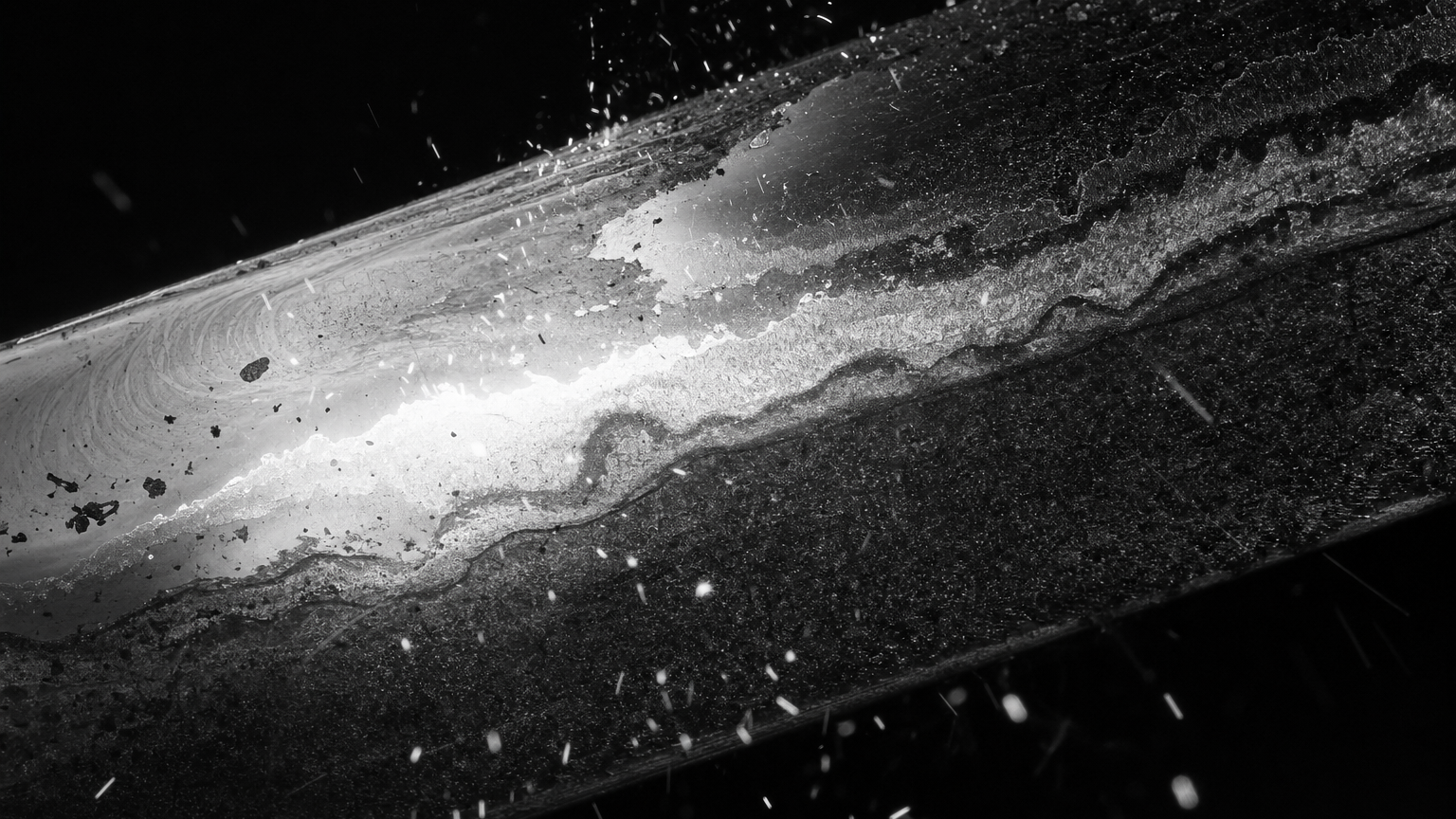
Running along the flat of the blade is the hamon — the temper line that separates the hard edge steel from the softer spine. The hamon is not merely decorative. It is the visible record of the differential hardening process, where the clay applied before quenching insulates the spine and allows the edge to reach maximum hardness. Different schools of smithing produced characteristic hamon patterns: the gentle undulating notare of the Soshu tradition, the tight and controlled suguha of the Yamashiro school, the complex midare patterns of the Bizen smiths.
The nakago (tang) is the portion of the blade hidden inside the handle. It is among the most important elements for authentication: it bears the smith’s signature (mei), registers the accumulated patina of centuries, and in legitimate antiques shows a characteristic oxidation colour called yasurime from the file marks applied during manufacture.
The Metallurgy: Tamahagane and the Science of Japanese Steel
The katana’s material basis is tamahagane — “jewel steel” — produced in a traditional iron-smelting furnace called a tatara. The tatara is loaded with iron-bearing river sand (satetsu or iron ore) and charcoal over a three-to-four-day continuous burn, reaching temperatures of approximately 1400°C. The process produces a bloom of iron at various carbon levels: from nearly pure iron at the bottom to high-carbon steel at the top.
The smith’s first task after smelting is to select and consolidate the bloom. High-carbon pieces (around 1.0-1.5% carbon) are chosen for the cutting edge; lower-carbon pieces for the core and spine. These are folded repeatedly — the number of folds varies by tradition and smith, but the purpose is to homogenise the carbon distribution and expel slag inclusions. Contrary to popular belief, more folding is not always better: beyond a certain point, the carbon content drops to a level that reduces hardness without improving toughness.
The combination of a hard cutting-edge steel (hagane) with a softer core (shingane) is what gives the katana its paradoxical character: an edge hard enough to hold a razor sharpness under impact, bonded to a body flexible enough to absorb shock without catastrophic fracture. The final differential hardening — achieved by coating the blade in clay before quenching in water — sets the hamon, drives the edge to maximum hardness via martensite formation, and simultaneously introduces the sori through differential thermal contraction.
Historical Development: Four Eras of the Katana
The history of the Japanese sword is divided into four principal periods, each with distinct metallurgical character and aesthetic emphasis.
Koto (ancient sword, up to c.1596): The earliest recognisably katana-form blades emerged in the late Heian period (794-1185), as mounted warfare demanded a curved, draw-cut weapon suited to cavalry combat. Koto-period blades are treasured for the complexity of their nie (crystalline martensite particles visible on the hamon surface) and the richness of their jigane — the surface texture of the steel created by the folding process. Many of Japan’s National Treasure designations belong to Koto-period masterworks.
Shinto (new sword, 1596-1780): The relative peace of the Edo period shifted swordsmanship toward formal practice and personal display. Shinto-period blades tend toward elegance rather than the raw battlefield functionality of earlier work. Many Shinto smiths worked in Edo or Osaka, and the era produced the first systematic documentation of smithing traditions.
Shinshinto (new-new sword, 1781-1876): A revival movement attempted to recover the technical excellence of the Koto period, with smiths like Suishinshi Masahide systematically studying earlier methods. The Meiji Restoration’s 1876 sword-ban effectively ended the Shinshinto era and created the conditions for the next major transition.
Gendaito (modern sword, 1876-present): Post-Meiji swords are classified as gendaito when made by hand using traditional methods. Japan’s current licensing system permits approximately 300 smiths to produce swords, each limited to 24 blades per year. These smiths undergo a rigorous apprenticeship and must pass government examinations before receiving certification from the Society for the Preservation of Japanese Art Swords (NBTHK).
Regional Schools and Traditions
Koto-period smithing was organised into five principal schools (gokaden), each associated with a geographic region and a distinctive aesthetic and metallurgical approach.
The Yamashiro tradition (Kyoto region) produced some of the most refined blades in Japanese history, including the legendary Awataguchi school. Yamashiro blades are associated with fine, tight jigane and suguha hamon of great clarity.
The Bizen tradition (modern Okayama prefecture) was the most prolific school, producing vast numbers of swords from the Heian through Sengoku periods. Bizen blades are known for their choji (clove-blossom) hamon patterns and the characteristic orange-tinted jigane of the local satetsu.
The Soshu tradition (Kamakura, later Sagami) was established under the direct patronage of the Hojo regency and produced what many regard as the apex of battlefield swordsmanship, including the work of Masamune. Soshu blades feature complex hamon patterns, deeply worked nie, and a nie-deki quality that makes the temper line appear to glow.
The Yamato tradition (Nara region) was closely linked to Buddhist temples and their warrior-monk retainers. Yamato blades are characterised by masame (straight-grain) jigane, reflecting the local iron sources and folding techniques.
The Mino tradition (Gifu region) rose to prominence in the Muromachi period, producing practical blades for the Sengoku warlords. Mino smiths were less concerned with aesthetic refinement and more focused on producing consistent, battle-ready weapons in volume — their technique is considered the precursor to modern mass-production methods.
The Making Process: Eight Stages from Iron to Blade
A hand-forged katana passes through eight distinct phases, each requiring specialised knowledge and years of practice to master.
1. Smelting (tatara-buki): The production of tamahagane from iron sand and charcoal over three to four days.
2. Steel selection and consolidation (age-age): The smith breaks up the bloom and selects pieces by carbon content, then welds them into working billets.
3. Forging and folding (tanren): The billet is drawn out, folded, and welded repeatedly — typically between 8 and 16 times — to homogenise the steel.
4. Combining edge and core steel (tsukurikomi): The hard hagane wraps around the softer shingane core in one of several composite constructions (kobuse, hon-sanmai, makuri, etc.).
5. Initial shaping (sunobe): The composite billet is drawn out to approximate blade length and the basic profile — point, curvature, thickness taper — is established by hammer.
6. Filing and rough grinding (shiage): Files and grinding stones refine the blade’s geometry, establishing the shinogi ridge and preparing the surface for clay application.
7. Clay coating and quenching (tsuchioki and yaki-ire): Clay is applied in controlled patterns — thin on the edge, thick on the spine — and the blade is heated to critical temperature before rapid quenching in water. This is the most dangerous phase: a too-slow quench produces an unhardened edge; too rapid a quench risks catastrophic fracture.
8. Polishing (togi): Traditional polishing is performed by specialists (togishi) distinct from the smith, using a graded series of natural stones over several days. The final polish both reveals the blade’s metallurgical character and prepares the surface for examination.
Famous Smiths: The Legends of the Blade
Masamune (active c.1288-1328) is widely regarded as the greatest swordsmith in Japanese history. Working in Sagami province under Soshu tradition, his blades are distinguished by a quality of jigane and hamon that has never been reliably reproduced. Only confirmed Masamune blades are classified as National Treasures; no signed example survives, as it was his practice not to sign his work. Attribution rests entirely on stylistic and metallurgical analysis.
Muramasa (early 16th century) is Masamune’s legendary counterpart — associated in folklore with blood-cursed blades and misfortune for the Tokugawa clan, though the historical basis for this reputation is largely literary rather than documented. Muramasa blades from the Mino tradition are technically superb, known for their sharp geometry and active hamon.
The Awataguchi school (Yamashiro tradition, 12th-13th centuries) produced Kuniyuki, Kunitomo, and the six Awataguchi brothers, whose work represents the pinnacle of refined Heian-period smithing. Awataguchi blades are considered the standard against which all subsequent refined work is measured.
Authenticating a Katana
The market for Japanese swords is complicated by centuries of forgeries, misattributions, and honest mistakes. Serious collectors rely on three principal authentication tools.
The NBTHK papers (Nihon Bijutsu Token Hozon Kyokai — Society for the Preservation of Japanese Art Swords) are the gold standard. The NBTHK issues papers at four levels: Hozon (preserved), Tokubetsu Hozon (specially preserved), Juyo Token (important sword), and Tokubetsu Juyo Token (especially important sword). Juyo designation requires committee examination and is not issued lightly.
Nakago examination is the primary physical authentication tool. A legitimate old nakago will have developed a distinctive rust patina over centuries — reddish-brown, often with a powdery texture — that is extremely difficult to fake convincingly. The yasurime (file mark) pattern is characteristic of regional schools. Signatures (mei) are examined by specialists who have studied thousands of examples and can identify both genuine smith attributions and known forgeries.
Metallurgical examination by an experienced polisher or sword appraiser can read the jigane, nie, and hamon character in a way that is difficult to fake at the quality level of historically significant blades.
The Daisho: Katana and Wakizashi as Paired Symbol
From the mid-Edo period, the wearing of a matched pair of long sword (katana) and shorter companion blade (wakizashi) — collectively the daisho — became the defining symbol of samurai status. The wakizashi, typically between 30 and 60 cm in nagasa, served as the indoor weapon (the katana was left at the entrance when calling on another household) and as the instrument for seppuku, the ritual self-disembowelment that was the samurai’s prerogative in extremis.
Daisho pairs made by the same smith to matching specifications are among the most prized collector pieces, as pairs that have remained together across centuries are rare. Most historical daisho were assembled from blades made by different smiths, unified by matching fittings (koshirae) rather than by the blades themselves.
Katana in Martial Arts: Kenjutsu, Iaido, and Iaijutsu
The sword arts of Japan are collectively known as kenjutsu in their battlefield form and have given rise to several modern disciplines practiced today. Iaido is the contemporary standardised form of sword drawing and cutting, practiced with a live blade (iaito) or wooden sword (bokken), emphasising the smooth drawing, cutting, and resheathing of the sword as a meditative discipline. Iaijutsu refers to the older, combat-oriented tradition from which modern Iaido derives, with schools (ryu) such as Eishin-ryu, Muso Shinden-ryu, and Tenshin Shoden Katori Shinto-ryu maintaining their classical curricula today.
Kenjutsu schools teach paired practice with shinai (bamboo training sword) or bokken, focusing on practical combat application. The modern sport of Kendo derives from the competitive elements of kenjutsu, using protective armour (bogu) and shinai.
Care and Maintenance
A katana in correct storage and regular maintenance will last centuries without deterioration. The enemy is moisture and fingerprint acid, both of which accelerate rust on the high-carbon steel surface.
Traditional maintenance uses three products: uchiko powder (a finely ground polishing stone in a silk ball) to remove old oil and minor surface oxidation; nuguigami (soft Japanese tissue paper) for wiping; and choji oil (a light mineral oil traditionally mixed with clove oil) for protective re-oiling. The blade should be wiped, powdered, wiped again, and re-oiled approximately every three months in dry conditions and more frequently in humid environments. The blade should never be touched with bare hands on the flat — hold it by the spine when necessary, and always wipe in the direction of the edge to avoid cuts.
Storage should be horizontal in a traditional sword stand (katana kake) or in a wooden storage box (shirasaya), in a dry environment with stable temperature. Never store a katana in a leather or synthetic scabbard for long periods — moisture accumulates and promotes rust.
Modern Katana Making in Japan
Japan’s sword-making tradition survived the Meiji ban and the post-war Allied prohibition through the efforts of dedicated preservationists. Today, approximately 300 licensed smiths are active in Japan, each permitted to produce 24 blades per year. They must complete a five-year apprenticeship and pass a rigorous examination that includes the production of a blade evaluated on metallurgical, aesthetic, and technical grounds.
The NBTHK and the All Japan Swordsmiths Association hold annual exhibitions and competitions that set the technical standards for the craft. Contemporary smiths such as Sumitani Masamine, Tsuruta Okimasa, and the late Gassan Sadaichi have demonstrated that the Koto-era quality of jigane and hamon complexity remains achievable through traditional methods — though the required tamahagane is now produced by the Japan Art Sword Preservation Society at a single annual smelting event, distributed among the licensed smiths.
Frequently Asked Questions
How long is a katana?
A standard katana has a blade length (nagasa) of between 60 and 73 centimetres. The most common historical measurement is approximately 70 cm (about 27.5 inches). Blades shorter than 60 cm are classified as wakizashi; those longer than 73 cm as nodachi or odachi.
What is tamahagane?
Tamahagane is the traditional Japanese steel used in katana production, smelted in a clay furnace (tatara) from iron sand and charcoal. The name means “jewel steel.” It contains varying carbon levels throughout the bloom, allowing the smith to select high-carbon pieces for the edge and low-carbon pieces for the flexible core.
What is the hamon on a katana?
The hamon is the visible temper line that separates the hardened edge steel from the softer spine. It is the direct result of the differential clay-coating applied before quenching: thin clay on the edge allows it to cool quickly and harden maximally; thick clay on the spine insulates it and allows it to remain tough and flexible. Different smithing schools produced characteristic hamon patterns — from straight suguha to undulating notare and complex midare.
What is the difference between a katana and a wakizashi?
The katana is a longsword with a blade of 60-73 cm, worn edge-up (ha-mune) in the belt and used with both hands. The wakizashi is a shorter companion sword (30-60 cm), worn alongside the katana as the indoor weapon and the instrument of seppuku. Together they form the daisho, the paired swords that were the exclusive privilege of the samurai class from the mid-Edo period.
How many times is a katana folded?
A traditional katana billet is typically folded between 8 and 16 times, creating between 256 and 65,536 theoretical layers. The purpose is not to maximise layer count but to homogenise carbon distribution and expel slag. More folding reduces carbon content — if folded too many times, the blade loses hardness. Claims of millions of layers are marketing fiction.
Who is considered the greatest katana maker in history?
Masamune, active in Sagami province around 1288-1328, is universally regarded as the greatest swordsmith in Japanese history. His blades are classified as National Treasures; no signed Masamune blade survives, as he did not sign his work. His nie-deki quality — the depth and vitality of the crystalline martensite particles on the hamon — has never been reliably reproduced.
What are NBTHK papers?
NBTHK papers are authentication certificates issued by the Society for the Preservation of Japanese Art Swords (Nihon Bijutsu Token Hozon Kyokai). They are issued at four levels of ascending significance: Hozon, Tokubetsu Hozon, Juyo Token, and Tokubetsu Juyo Token. Papers do not guarantee attribution to a named smith but confirm that the blade is a genuine antique of the period and quality claimed, as assessed by a committee of recognised experts.
Is it legal to own a katana outside Japan?
Laws vary significantly by country. In most Western countries, owning an antique or modern hand-forged katana is legal for adults, subject to restrictions on carrying in public. In Japan, sword ownership requires registration with the Board of Education for antique pieces; modern production is regulated by the licensing system. The UK, Canada, and Australia have specific restrictions on importation and sale of curved swords exceeding certain specifications — owners should consult current national legislation.
How do you tell a real katana from a fake?
Key indicators of a genuine antique katana include: the nakago (tang) showing authentic period rust patina with appropriate yasurime file marks; a visible hamon that is the result of differential hardening rather than acid etching; jigane (surface texture) consistent with the claimed period and school; and NBTHK or equivalent authentication papers. Modern production katanas from licensed Japanese smiths will have the smith’s signature and registration documents. Suspiciously low prices for pieces claiming antique attribution are almost always a sign of fakery.
What is the difference between a katana and a tachi?
The tachi is an earlier form of Japanese longsword, worn suspended from the belt edge-down (as opposed to the katana, which is thrust through the belt edge-up). The tachi generally has a longer nagasa and a deeper sori near the tang, suited to the mounted warrior drawing the sword in a downward sweep. Many Koto-period blades now classified and worn as katana were originally made and worn as tachi — they were shortened (suriage) during the Muromachi period when ground combat became more common.
How long does it take to make a katana?
A hand-forged katana produced by a licensed Japanese smith typically takes between three and six months from initial steel preparation to final polish and fittings. The tatara smelting itself takes three to four days; forging and shaping another three to five days; the polishing alone, when performed by a specialist togishi using traditional natural stones, takes one to three weeks for a blade of high quality.
What is the Gokaden — the five traditions of Japanese swordmaking?
The Gokaden are the five regional smithing traditions of the Koto period: Yamashiro (Kyoto), Yamato (Nara), Bizen (Okayama), Soshu (Sagami/Kamakura), and Mino (Gifu). Each school developed distinctive metallurgical and aesthetic characteristics rooted in the local iron sources, clay quality, and water available for quenching. The Soshu school, under the patronage of the Kamakura shogunate, is generally considered the apex of Koto-period technical achievement.
What oil should you use to maintain a katana?
Traditional maintenance uses choji oil — a light mineral oil historically blended with a small proportion of clove oil. Modern equivalents include pure mineral oil (such as sewing machine oil) in very thin applications. The blade should be cleaned of old oil using uchiko powder (applied via a silk ball) and soft washi paper before re-oiling. Never use cooking oils, olive oil, or WD-40, as these either oxidise and become sticky or are too heavy and will trap moisture under the oil film.
What is a shinken vs. iaito?
A shinken (lit. “real sword”) is a functional, sharp-edged katana made of high-carbon steel with a genuine hamon from differential hardening. An iaito is a practice sword for Iaido and Iaijutsu, typically made from an aluminium-zinc alloy that cannot hold a sharp edge. Most practitioners train with iaito to reduce injury risk; only advanced students practice with shinken under strict supervision. In Japan, iaito do not require the registration that shinken do under the Firearms and Swords Control Law.
How many katanas exist today?
Accurate global numbers are impossible to establish, but estimates suggest approximately 2.5 million Japanese swords of all periods exist worldwide, with perhaps 150,000-200,000 classified as significant antiques by the NBTHK or equivalent bodies. Japan’s Board of Education registers approximately 400,000 swords domestically. Hundreds of thousands more are held in collections and military surplus outside Japan, many without formal provenance documentation.